

An industrial asset’s environmental condition can reshape investment economics before operations begin. Environmental due diligence in industrial investments assesses potential contamination, the need for further investigation or remediation, and liabilities that may affect a transaction. A Phase I Environmental Site Assessment reviews records, site conditions, and relevant interviews. If it identifies potential contamination, a Phase II assessment may test soil, groundwater, or building materials.
Buyers know that an industrial property’s history matters. The challenge is translating environmental findings into clear decisions about risk, value, and future obligations. This article explains what an assessment examines, how contamination findings inform remediation planning, and how environmental liabilities can affect transaction terms and financing. It also outlines how professional due diligence brings environmental, operational, and investment considerations together when evaluating an industrial opportunity.
Key Takeaways
- Understand how records, site inspections, and interviews identify potential environmental concerns, and when sampling may be warranted.
- Learn how the type and extent of contamination shape remediation options and the investment decisions that follow.
- Assess how environmental liabilities can influence transaction structure, financing, negotiations, and an asset’s purchase price.
- See how professional due diligence connects environmental findings with operational, permitting, and long-term investment considerations.
What’s Included in an Environmental Site Assessment?
An environmental site assessment examines a property’s history and current conditions for potential contamination. For industrial buyers, its findings help determine whether further investigation or operational review is warranted.
Phase I and Phase II Assessments
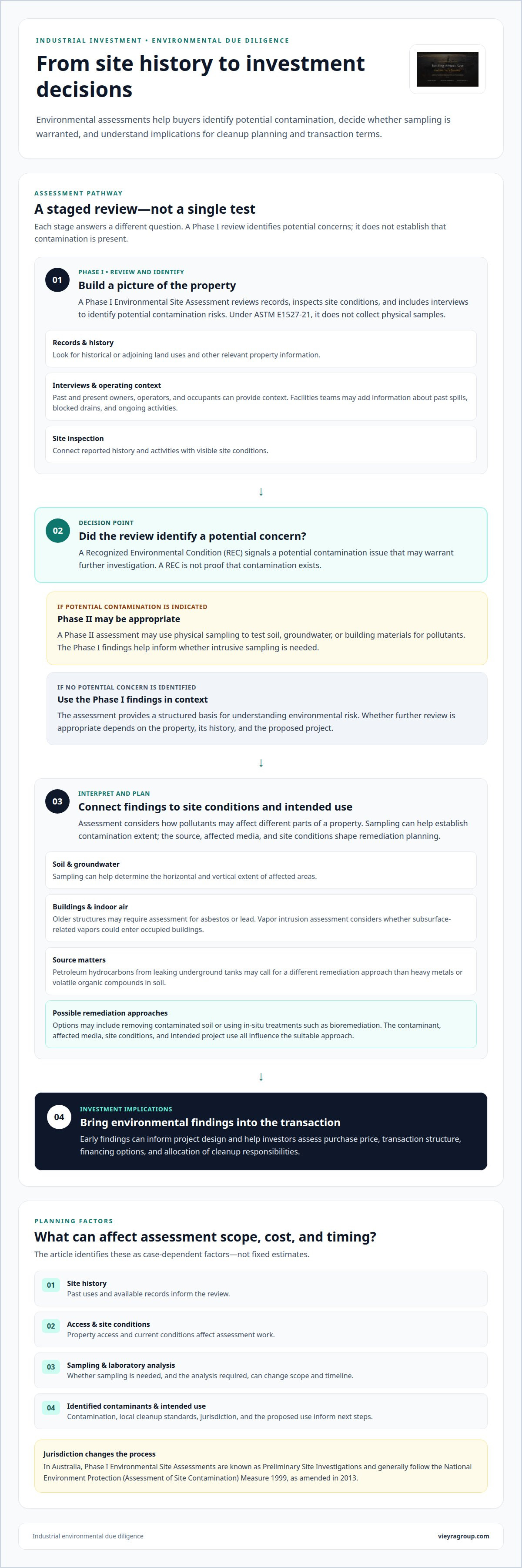
A Phase I Environmental Site Assessment reviews records, inspects the site, and includes interviews to identify potential contamination risks. Under ASTM E1527-21, these steps help identify recognized environmental conditions without collecting physical samples. A Phase II assessment may follow when potential contamination is indicated, testing soil, groundwater, or building materials for pollutants. The distinction matters: findings from the initial review inform whether intrusive sampling is needed.
Recognized Environmental Conditions
Recognized Environmental Conditions are potential contamination concerns identified through a Phase I assessment. They may stem from historical or adjoining land uses, or from current site conditions revealed by records, interviews, and inspection. Identifying a condition does not establish contamination; it signals an issue that may warrant further investigation. For buyers, the report provides a structured basis for understanding environmental risks and deciding whether a Phase II assessment is appropriate.
Assessment Records and Site Visits
Records, interviews, and site visits provide complementary evidence about a property’s environmental history and current condition. Federal All Appropriate Inquiries criteria include interviews with past and present owners, operators, and occupants, according to the U.S. Congress. At operating industrial assets, facilities teams and site managers can add context about past spills, blocked drains, and ongoing activities. An inspection connects that information to visible site conditions. The U.S. Environmental Protection Agency states that industrial facilities must obtain permits if their discharges go directly to surface waters.
State Rules, Costs, and Timelines
Applicable assessment and cleanup requirements depend on the property’s jurisdiction, contamination, and intended use. Buyers should understand the relevant local process and cleanup standards before interpreting findings or planning redevelopment. In Australia, Phase 1 Environmental Site Assessments are known as Preliminary Site Investigations; they generally follow the National Environment Protection (Assessment of Site Contamination) Measure 1999, as amended in 2013, according to the National Environment Protection Council. Assessment costs and timelines depend on factors such as site history, access, sampling needs, laboratory analysis, and identified contaminants. For ongoing operations, the scope also reflects active processes, discharge pathways, and available operational records.
Contamination assessment and remediation planning
Environmental risk assessment links site conditions to the financial and operational implications of a proposed purchase. Its findings can inform project planning before transaction terms are settled.
Pre-Purchase Environmental Risk Assessment
A pre-purchase environmental risk assessment examines potential contamination and its implications before an investor acquires an industrial property. Historical records, current operations, and site conditions help show where further investigation may be needed. Timing matters because identified risks can inform the purchase price, transaction structure, and allocation of cleanup responsibilities. Assessment findings also help investors distinguish manageable remediation planning from conditions that could materially change a project’s assumptions.
Contamination Risks Across Site Media
Environmental contamination risk assessment considers how pollutants may affect soil, groundwater, buildings, and indoor air. Soil and groundwater sampling can help establish the extent of contamination, while older structures may require assessment for asbestos or lead. Vapor intrusion assessment considers whether vapors associated with subsurface contamination could enter occupied buildings. The likely source and pathway matter: petroleum hydrocarbons from leaking underground tanks may call for a different remediation approach than heavy metals or volatile organic compounds in soil.
Assessment Timing and Remediation Planning
Investors should commission an assessment before purchase when records, site conditions, or prior industrial activities suggest possible contamination. Findings can identify the horizontal and vertical extent of affected areas and inform cleanup options. Remediation may involve removing contaminated soil or using in-situ treatments such as bioremediation. The contaminant, affected media, site conditions, and intended project use all influence the suitable approach. Early planning lets environmental findings inform project design and transaction structure.
Tax assessment belongs alongside environmental review in broader commercial property due diligence, helping investors consider the asset’s fiscal context as well as contamination risks. For industrial projects, aligning these findings with long-term capital allocation can strengthen investment analysis; strategic investment considerations belong within that wider assessment.
Environmental liabilities in property and project transactions
Environmental findings can change an industrial transaction’s price, structure, financing options, and allocation of responsibility. In the United States, CERCLA makes ownership and pre-acquisition due diligence central considerations.
Liabilities in Acquisitions
Environmental liabilities in an acquisition can include investigation, cleanup, and claims related to hazardous substances. Under the United States Comprehensive Environmental Response, Compensation and Liability Act (CERCLA), a property owner may be liable simply because they own contaminated property, even if they did not cause the contamination. That exposure can affect buyers’ transaction assumptions and the responsibilities assigned to owners.
Before acquiring property in the United States, prospective purchasers seeking CERCLA protection must conduct All Appropriate Inquiry prior to acquiring the property. Proper environmental due diligence can support a Bona Fide Prospective Purchaser defense under CERCLA. These protections do not end the analysis after closing: covered owners must exercise appropriate care regarding hazardous substances and comply with land use restrictions during property ownership.
Costs of Neglected Due Diligence
Insufficient due diligence can leave buyers facing cleanup obligations not reflected in the purchase price or project plan. Under CERCLA, remediation costs for a liable party can run into millions of dollars. Contamination that affects neighboring properties or groundwater can also lead to lawsuits, extending financial exposure beyond work at the acquired site.
The case illustrates how an environmental issue can be disproportionate to a property’s purchase price. Findings can inform negotiation strategies, including adjusted pricing, negotiated cleanup responsibilities, or environmental insurance.
Transaction documents also matter. Reviewing environmental contracts can clarify potential cleanup responsibilities, while assessment findings help evaluate liability costs against an asset’s purchase price. For energy projects, environmental damage, required mitigation, and regulatory non-compliance can affect an asset’s true value. Buyers can use due diligence findings to shape transaction structure, financing decisions, and terms governing future environmental obligations.
Professional environmental due diligence support
Professional support connects environmental findings to the operational and financial questions surrounding an industrial investment. In commercial projects, this means considering regulations, infrastructure, and future environmental demands alongside site conditions.
Environmental specialists can assess air and water permitting before development, including considerations under the Clean Water Act and Clean Air Act. For an industrial facility, a review may examine discharge pathways, emissions, operating processes, and how proposed changes could affect permitting needs. Groundwater findings matter too: contamination can influence site use, remediation planning, and the investment required to manage environmental conditions over time.
Due diligence should consider environmental findings alongside operational functionality, utility implications, and zoning regulations. These factors interact. For example, a proposed change in industrial use may affect utility requirements and permitting analysis, while site restrictions can shape project design. A coordinated review helps investors understand how environmental conditions may affect development plans and future investment demands from authorities.
Professional analysis also gives findings a structure for decision-making. It can distinguish established conditions from questions needing further investigation, relate environmental demands to the planned project, and identify where obligations may affect the transaction or ongoing operations. This helps prevent a costly mismatch between an asset’s environmental profile and an investor’s operating assumptions. Clear records and a coherent account of findings support review across investment, technical, and operational teams.
For investors evaluating industrial projects, the central takeaway is integration: environmental conditions should inform project feasibility, capital allocation, and operating plans rather than remain isolated in a technical report. Consider your industrial investment strategy in light of these connected environmental and operational demands.
Vieyra Family Office: Global Investment Management
Vieyra Family Office brings a long-term investment perspective to industrial opportunities where environmental findings may influence asset value, project viability, and capital requirements. Its Global Investment Management and Strategic Capital Solutions offerings help institutional partners consider how an industrial asset fits within a broader portfolio and development strategy.
For projects focused on African industrialization, African Industrialization Capital provides a relevant investment context. Environmental due diligence remains an important part of investment analysis, helping clarify potential obligations and the relationship between site conditions and long-term plans. Findings can inform whether an opportunity’s risks and strategic purpose align with an investment mandate.
For a discussion of industrial investment priorities, contact Vieyra Family Office.
Carry Environmental Insight Into Long-Term Decisions
The decision is not simply whether an industrial asset can be acquired, but how its environmental profile should inform the investment’s long-term mandate. Treating environmental due diligence in industrial investments as part of ongoing capital governance can help align acquisition assumptions, development priorities, and stewardship responsibilities as projects evolve. This perspective extends beyond closing, particularly when operational changes or new investment phases may alter environmental demands.
For institutional investors weighing an industrial opportunity against wider strategic objectives, consider how its environmental profile fits the intended investment horizon and development purpose. A focused discussion can bring those priorities into view without reducing the decision to a single assessment finding.
Contact Vieyra Family Office to discuss your investment priorities and the role of industrial opportunities within them. A clear strategic direction can provide a sound foundation for the decisions ahead.
Frequently Asked Questions
What is Environmental Due Diligence?
Environmental due diligence in industrial investments reviews environmental conditions and potential obligations that may affect an asset or project. It helps investors understand how site history, present operations, and planned use relate to investment decisions. The review extends beyond a single inspection: findings can inform acquisition analysis, development planning, and ongoing oversight of environmental matters.
Conclusion: Now What?
Translate findings into clear investment decisions: identify which issues affect project assumptions, what responsibilities must be allocated, and what information belongs in the decision record. For institutional investment matters, contact with Vieyra Family Office is Access by Invitation. Relating environmental considerations to the investment mandate gives the discussion a defined strategic context.
When is it Required?
Timing and requirements depend on the transaction, jurisdiction, lender, and intended property use. In the United States, prospective purchasers seeking CERCLA protection must complete All Appropriate Inquiry before acquiring the property. Lenders may also require environmental due diligence before authorizing transaction financing. For a proposed development, assessment before major commitments can help incorporate environmental considerations into project planning.
Who handles the due diligence process?
Environmental consultants can conduct assessments, identify potential liabilities, and recommend remediation strategies. Their technical findings inform the wider transaction team, including investment, legal, operational, and project personnel, who consider the implications for their decisions. For example, operational representatives can explain how planned facility changes relate to site conditions, while investment teams assess effects on transaction terms and capital allocation.
Who is Liable When Contamination is Present?
Liability depends on the applicable jurisdiction and the property’s circumstances. In the United States, CERCLA can make an owner liable for hazardous substances because of ownership, even if that owner did not cause the contamination. Prospective purchasers seeking a Bona Fide Prospective Purchaser defense must conduct All Appropriate Inquiry before acquisition and meet applicable continuing obligations during ownership.
Why is professional environmental advice important?
Professional advice helps interpret technical findings in relation to project decisions, regulatory demands, and future environmental investment needs. A specialist can distinguish information that supports a defined action from issues requiring further analysis, then explain how each relates to a proposed industrial use. This perspective helps investment and operations teams consider environmental matters together, rather than treating a technical report as separate from the project’s broader assumptions.


